

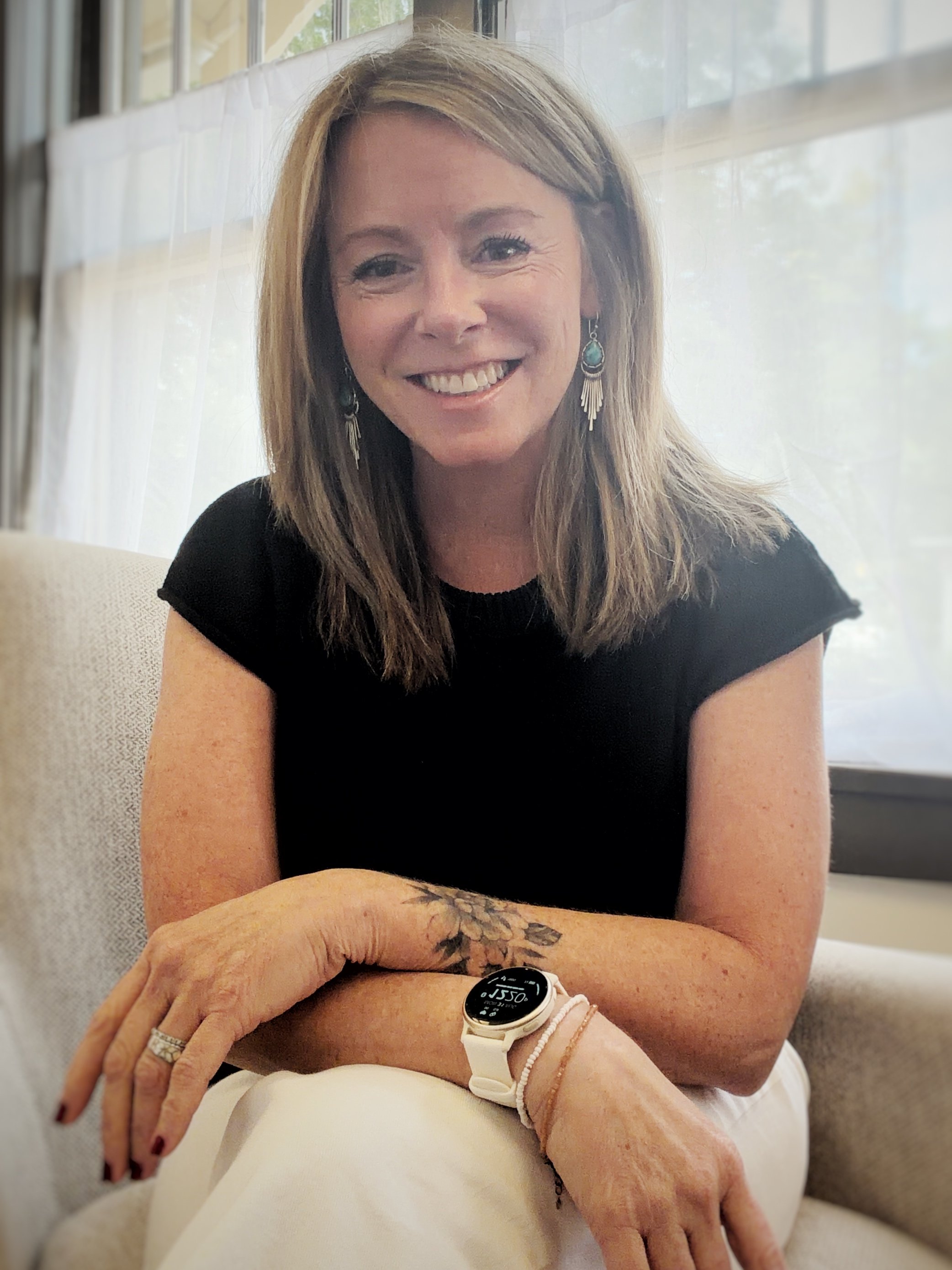
There are so many ways to be a therapist—and we think finding someone whose way of seeing the world resonates with yours matters. Meet Julie, one of the humans behind The Art of Becoming Collective.
You might resonate with Julie if you’re navigating relationships, identity, grief, or midlife change. You’re curious about the deeper patterns beneath how you connect, protect, and relate. You want therapy with warmth, depth, creativity, and room for your whole story. She has a particular heart for the the transitions that ask us to rediscover who we are: changing relationships, parenting and empty nesting, grief and loss, faith shifts and religious trauma, divorce, and the identity questions that often emerge in midlife.
Julie is a depth-oriented, trauma-informed clinician who works with adults and couples navigating the places where relationship, identity, grief, anxiety, and old stories collide. Her work is rooted in the belief that the patterns we repeat are rarely just about what is happening on the surface. Beneath conflict, disconnection, over-functioning, anxiety, or the feeling that we’ve somehow lost ourselves, there is often a deeper story asking to be understood. She believes healing begins when you are truly seen, heard, and valued exactly as you are.
Julie brings warmth, curiosity, creativity, and depth into the therapy room, with a particular attentiveness to the stories and patterns we carry into our relationships, identities, and seasons of change. Her work invites us to get curious about what has shaped us, what we’ve learned to protect, and what might be asking to emerge now.
We’re grateful for the particular way Julie sees, listens, and companions people in the ongoing work of becoming. ✨ Learn more about Julie and her work at juliekittredge.com or check out her latest blog post as she shares her heart on one topic she feels passionate about: https://www.theartofbecomingcollective.com/blog/rebuildingconnectionwithyouradultchild
