“Good God, there isn’t a healthy body in the world that is stronger than a sick person’s spirit”
-Andrea Gibson from the poem “Gender in the Key of Lyme Disease”
I’m going to tell you a story. Like all stories that are true, it’s hard to point to a clear beginning, middle or end. Certainly not an end, because I’m still here, living out this story every day. Forced into a single blog post, this is a condensed tale of chronic pain and a mother in crisis. Pain so viscous and demonic that it almost ended my life, cutting our story savagely short. The full story involves microscopic bacteria and intracellular parasites, doctors and dentists, stem cells and surgeries. Nerve blocks, psychedelics, and remarkable neuroscience make their cameos too. There is longing and desperation, but there is also persistence and patience that give way to hope and healing.
It is my personal hope dear reader, that whether your story sounds like mine (part psychodrama, part thriller) or encompasses something else in the vast universe of insults and injuries we humans endure - maybe cancer or a car crash, or perhaps something a little more avant garde like CRPS or POTs - I want you to hold on to the notion that even if you cannot be “cured” you can still find what it means to experience health and healing. Just as my story is still unfolding, so is yours. Our stories march alongside medical advancements and new understandings of what the body needs in order to heal.
I hold tremendous hope in the medical miracles of tomorrow. And yet, if I were to single out the most transformative chapter in my own story—a tome filled with specialists ranging from the Dr. Jekylls and Mr. Hydes to Glinda the Good Witch—it would be the chapter in which I discovered just how profoundly the relationship between my nervous system, immune system, and the emotional experiences I had been carrying could shape my health. It was a lesson that ultimately taught me something no medical specialist alone could.
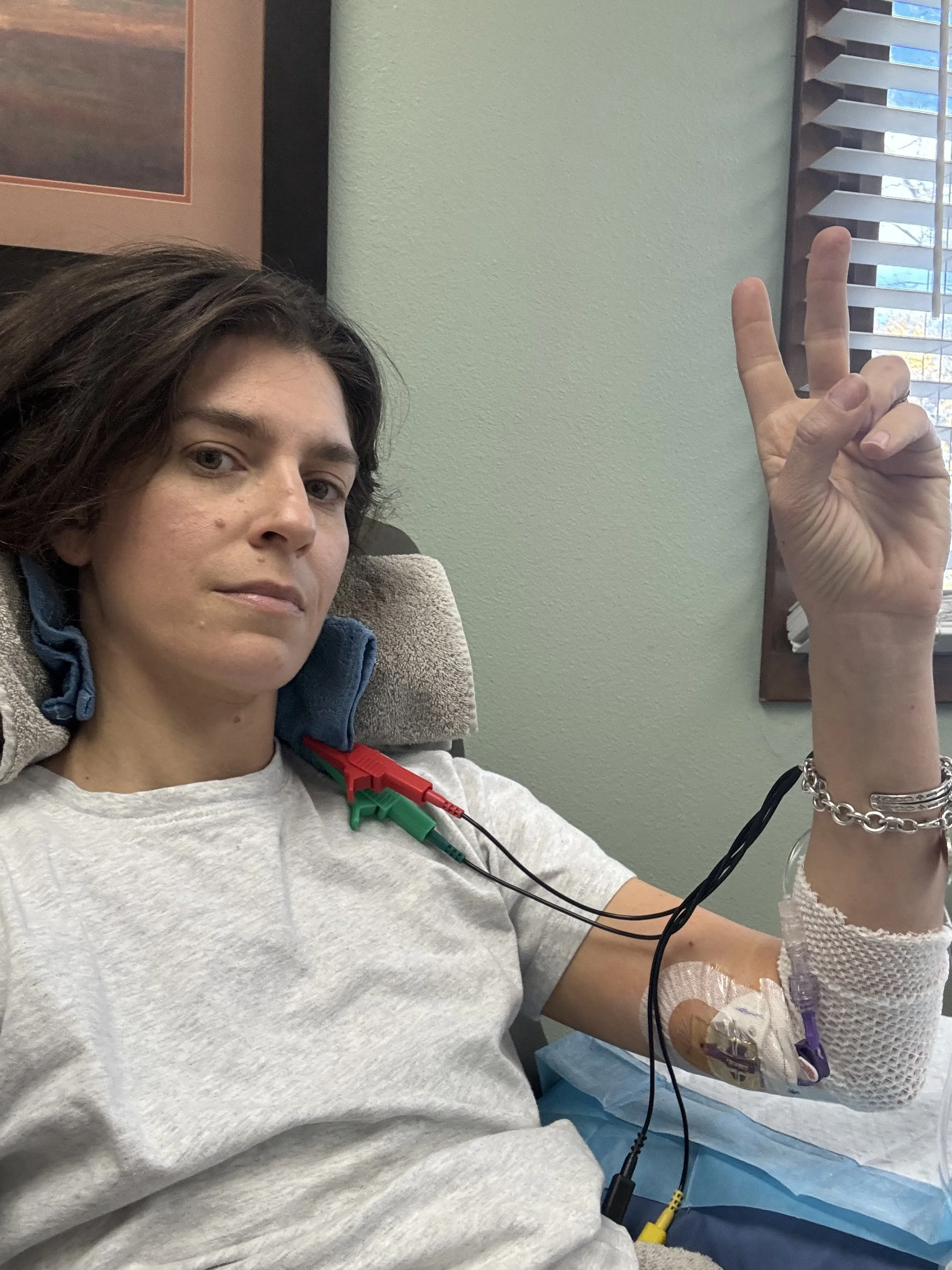
For a long time, I believed my physical symptoms were entirely separate from my emotional experiences. I had Lyme disease and multiple co-infections, and the neurological symptoms were so debilitating that I no longer felt safe driving and could not confidently care for my children on my own. I experienced intense brain fog, dizziness, sensory disturbances, debilitating insomnia and an ever present, cruel burning hot stabbing sensation throughout my body. This all started postpartum with my second child, at the height of the pandemic when childcare and community connections evaporated. My body felt completely unpredictable. I was living in constant fear while trying desperately to take care of my baby and toddler and frantically working to understand what was happening to me.
In 2022, after a few years of mystery symptoms, I walked into my first appointment with a Lyme doctor and ultimately received valid testing and a diagnosis. I remember thinking, “bring on the antibiotics”. Even as a trained therapist with an understanding of the mind-body connection, I was floored when the doctor started talking to me about my limbic system and recommended I look into brain retraining programs. “What the hell?” I thought, “can we not just kill the pathogens and call it a day?”. At my urging, antibiotics were brought on, but healing did not follow. From where I sit today, I often wonder what would have happened had I taken that first doctor's advice to begin with.
In retrospect, I had likely been living with these infections for years. Yet, for much of that time, my immune system appeared to be keeping them relatively well controlled. It wasn't until several significant stressors converged that my physical health began to unravel. The uncertainty and collective fear of COVID, the physical and emotional demands of postpartum life with no one around to help, and prolonged insomnia created a level of stress my body could not endure. It was as if the dam of my immune system broke and lyme symptoms flowed over in abundance.
We often think of stress as something that happens in our minds, while pain and illness happen in our bodies. But our nervous, endocrine, and immune systems are in constant communication on a subconscious level. Emotional stress, unresolved trauma, prolonged uncertainty, and even the everyday pressures we may not consciously recognize can influence inflammation, immune functioning, autonomic nervous system activity, and how the brain processes sensory information.
This doesn't mean that emotional experiences cause every illness, or that physical symptoms are imagined. It means that our biology is responsive to our experiences.
The brain is constantly evaluating information from both inside and outside the body to determine whether we are safe or under threat. Past experiences, current relationships, emotional conflicts, and ongoing stress can all influence that assessment. When the nervous system spends extended periods in a heightened state of protection or bracing, it can become increasingly sensitive and reactive.
Sometimes, the emotional undercurrent isn't an obvious traumatic event. It might be the pressure to keep functioning when you're exhausted, the fear of disappointing others, the loneliness of feeling misunderstood, or the grief of watching your life become smaller because of chronic illness. These experiences can quietly reinforce a nervous system that is already struggling to find a sense of safety.
For me, understanding this connection didn't mean dismissing my infections or abandoning medical treatment. It meant recognizing that addressing the physical contributors to my illness was only one part of supporting my recovery.
Years and years rolled on after that first appointment with a Lyme doctor. They were filled with many treatment protocols, prescriptions, supplements, invasive and sometimes wholly alternative interventions and even surgery. And physical pain, lots of pain. But at some point, I began to see the importance of looking beyond symptoms and asking what else my nervous system might be responding to. What experiences have left me feeling unsafe? What emotions had I learned to suppress? What pressures was I continuing to place on myself despite having very little capacity left?
Healing, I came to understand, needed to incorporate more than treating the infections. Helping my mind and my nervous system recognize that it no longer needs to remain in a constant state of protection or bracing ultimately gave way to a parasympathetic state of “rest and digest”. This was what my system needed to begin recovering. Pain may not be just in your head, but the solution doesn’t always lie solely in treating the body. Recovery has not been linear nor easy. I still have hard days. But when I look at where I am today compared to the completely incapacitated person I was 5 years ago, it’s truly astounding.
I live a full and meaningful life again. I credit many people, practitioners, and healing modalities along the way, but I first began to experience a profound shift when I started addressing the emotional layers of my illness and my past, untangled the fear and the grief, and cultivated a sense of trust and safety within my body—even in the presence of pain. It was only then that I felt my system had the capacity to truly absorb and metabolize what it needed to heal.
I’ll be speaking more about this process at The Art of Becoming’s event Body, Mind, and Medicine: A Shared Approach to Chronic Pain and if you can join me, I would love to hear your stories as well.
Our histories live in our physiology, and our present experiences continue to shape it. Sometimes, understanding chronic pain and illness requires looking not only at what happened to the body, but also the stories our bodies have been carrying.